Using surveys to help us learn
Each computer centre is set up with two goals 1) teach young people computer skills relevant to the job market, 2) have students learn side by side with those of another identity to help break down stereotypes and prejudice. It’s an old but gold staple of peacebuilding projects. For us it’s important to know if its working and how we can do it better.
How we measure it
Students complete a short survey when they arrive and again in their final week, across four areas: knowledge of the other religion, friendship across the divide, trust, and empathy. Comparing where a young person starts and where they finish lets us see, in their own responses, whether the distance has closed. It’s a method that has its flaws (discussed later) but it is one helpful indicator we’re using that lets us know if things are moving in the right direction.
We built this survey deliberately with the centres. The questions draw on two sources: items used in academic studies that test these same ideas, and the input of centre staff and alumni students, who helped us make sure the wording is relatable and really tests what it is meant to. Students respond on a five-point scale from strongly disagree to strongly agree. A few examples:
"It is easy for me to attend religious celebrations of the other religion (e.g. Christmas or Salah)."
"I would enjoy visiting the home of someone from the other religion."
"If I agreed with their policies, I would vote for a political party whose leader had a different religion to mine."
“Youth of other religions have concerns and worries that are similar to mine."
Last year we reported that around 70% of students showed a reduction in prejudice using these indicators over the course of the most recent semester at that time. That figure came from a single semester, one of our strongest. This year we can look across two full years, which gives a steadier picture.
What two years of data show
Across two years, close to two in three young people finish more tolerant of the other community than when they arrived. Students also improved in all four areas we track, not just knowledge. Across the full two years, students improved significantly in all four areas we track: knowledge, friendship, trust, and empathy alike.
Two patterns within that picture are especially encouraging.
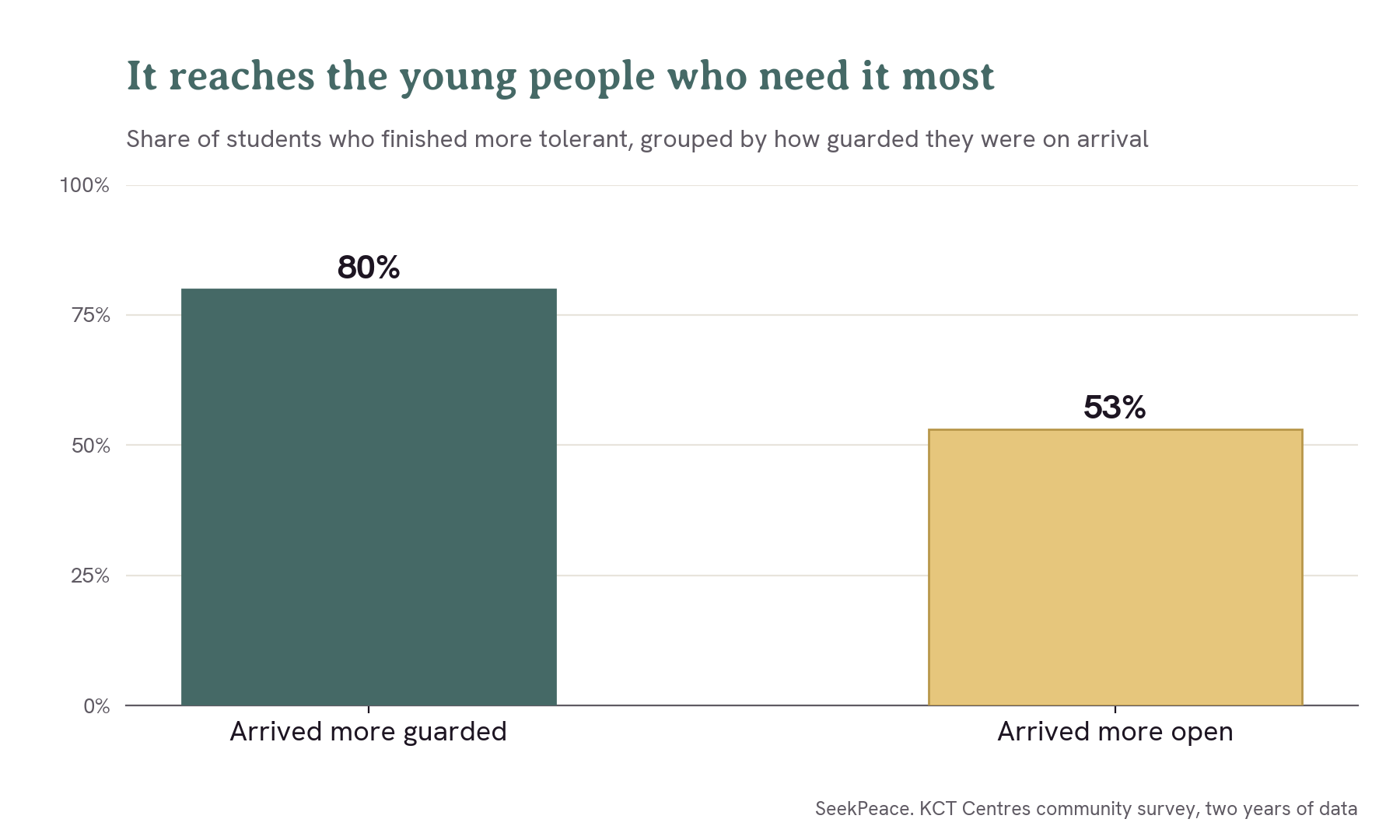
The first is who the programme reaches. When we group students by how guarded they were on arrival, those who walk in most wary of the other community are the ones most likely to change: around four in five of them finish more tolerant, compared with around half of those who arrive already open. In other words, the course is doing most for the young people most likely to carry division into adulthood.
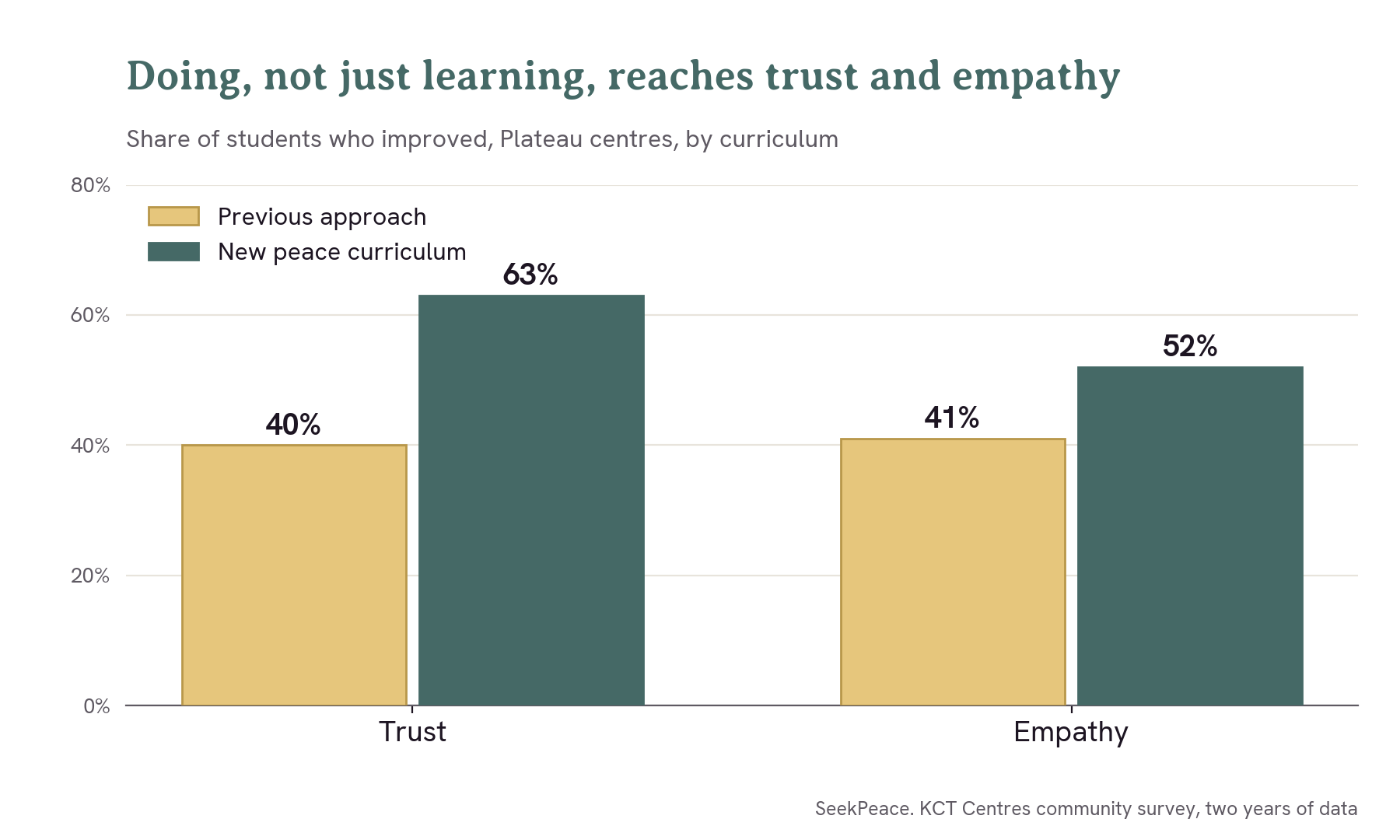
The second is how we teach. We have been introducing a new peace curriculum across our Plateau centres, built around practical, hands-on exercises rather than teaching alone. Both trust and empathy have begun to move under the new approach. It's early, and we're watching closely, but hands-on work seems to reach trust and empathy in a way teaching alone didn't.
Every method has limits
We share these numbers with care. This is real-world monitoring across seven centres, not a laboratory trial, and our findings rest on the students we can track from first day to last, who tend to be the more engaged. The full picture across every enrolee is likely a little more mixed than the most committed alone would suggest.
Numbers can show us that something is changing. They cannot tell us why. So we are now building something to sit alongside them: a growing record of students' own experiences, gathered through a method called outcome harvesting. It documents real change in a young person's life or relationships, and works backward to understand what caused it, in their words and their community's. Over time this becomes a library of lived experience shows us, story by story, how bringing people together actually works. We will begin sharing from it early next year.