
The two hands of peacebuilding
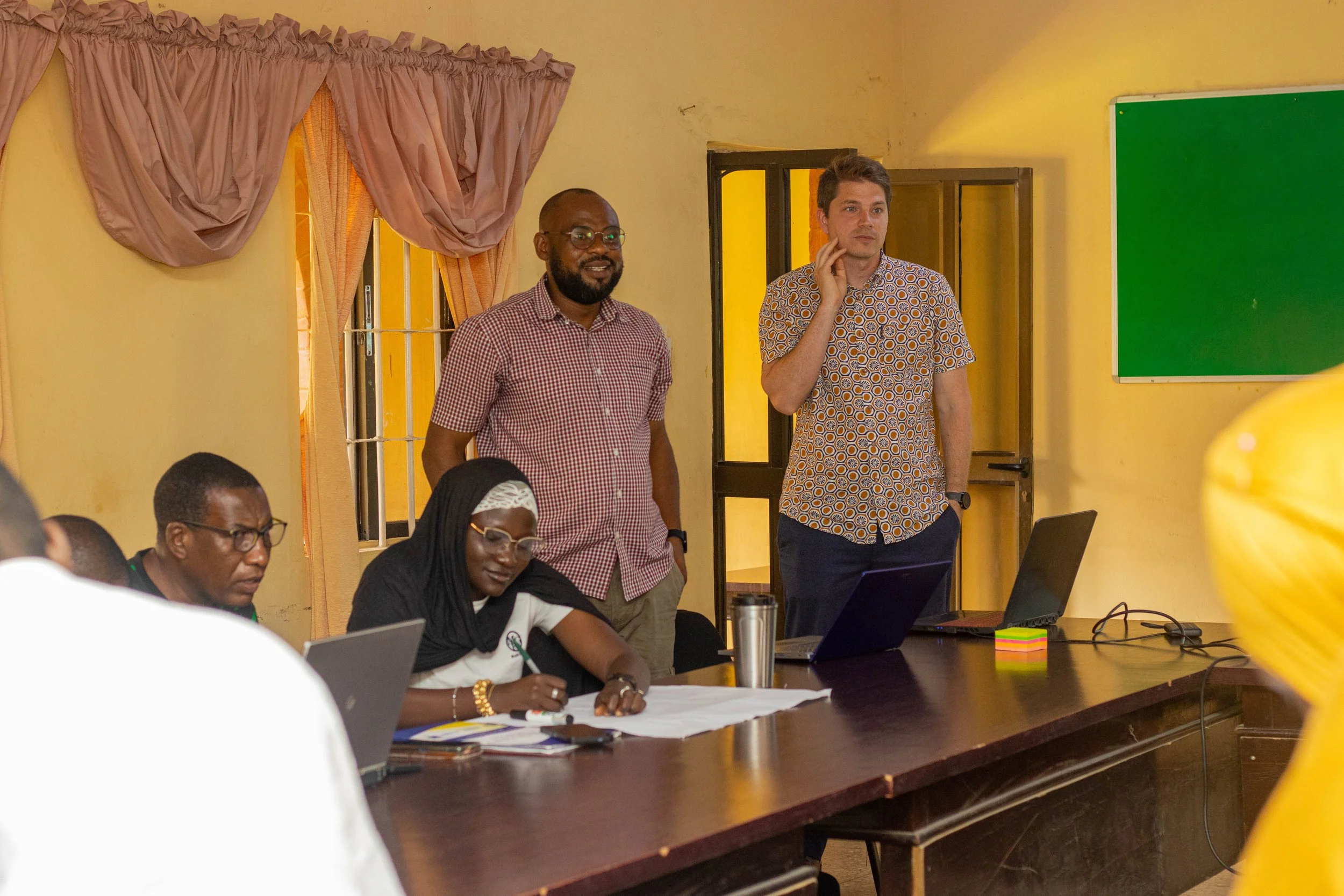
John & Agbo facilitating learning sessions with peacebuilding partners in Jos, Nigeria
In our experience, the Church is excellent at responding to violence and crisis with compassion and relief. Whether it is housing those who have been displaced, feeding the stranger or sitting with those who have been traumatised, the Church is consistent and present support.
We have come to see this as the pastoral hand of the Church: mercy and compassion. It is holy work, and nothing that follows should be heard as trying to take anything away from that.
But we have also come to see that the other hand of peacebuilding, the second hand: the prophetic hand, is often left idle.
Why does crisis keep returning?
Archbishop Desmond Tutu once told a story:
People were standing beside a river when they saw a body float past. They waded in and pulled it out. Then another came, and another, and they spent themselves hauling body after body from the water, giving everything they had to the rescue. It was exhausting, necessary, holy work, the very work Tutu gave his own life to as a man of the Church. But at some point, he said, someone has to go upstream and find out who is throwing them in.
The first hand of peacebuilding, the pastoral hand shows mercy and compassion. It tends to the wounded, but it does not always, on its own, ask why the wounded keep coming. This is where the second hand of peacebuilding comes in: the prophetic hand.
Scripture does not just call God's people to mercy. It calls them to justice also. The prophets did not merely comfort the afflicted; they named what was producing the affliction, and they refused to let the powerful pretend not to see it. To do justice, to love mercy, and to walk humbly with God, as Micah puts it, is a single calling with more than one motion in it.
The prophetic hand
The prophetic hand of the Church is the one that asks why. It disrupts. It goes upstream. It looks past the immediate emergency to the conditions that keep producing it. This is harder, slower and far less visible than relief.
It is often less well received, and it is meddlesome, but it is what God calls us to, just as he called the prophets and the saints to it.
It is not an alternative to mercy. It is a complement to it. Mercy without justice leaves the system intact. Justice without mercy loses its heart. The Church, at its best, offers both hands at once.
What it looks like in our work
In contexts where our partners work tirelessly to deliver mercy and compassion to those who suffer, we are able to come alongside them to facilitate the slow work of capturing learnings, researching context, and helping to design new projects that have the potential to disrupt these cycles. We supported four charities in Jos to explore the factors that sustain conflict amongst youth and how they relate to one another. You can see that analysis as an interactive systems map here. At Seek Peace we’ve started to call this the work of ‘prophetic disruption’.
This piece of work has helped us to explore what is upstream, to look beyond the symptoms and identify the systems that sustain conflict locally. As it has surfaced factors, we have been working with the four charities to design new projects that address them:
Digital peacebuilding skills for youth, aimed at training young people to confront the rumours and harmful narratives that surface online and drive violence
Confidential spaces for religious leaders to discuss and collectively confront the pressures they face to stay silent or be complicit in narratives of religious violence
The work of Seek Peace will continue to support local Christian peacebuilders to enact these two hands of peacebuilding.