
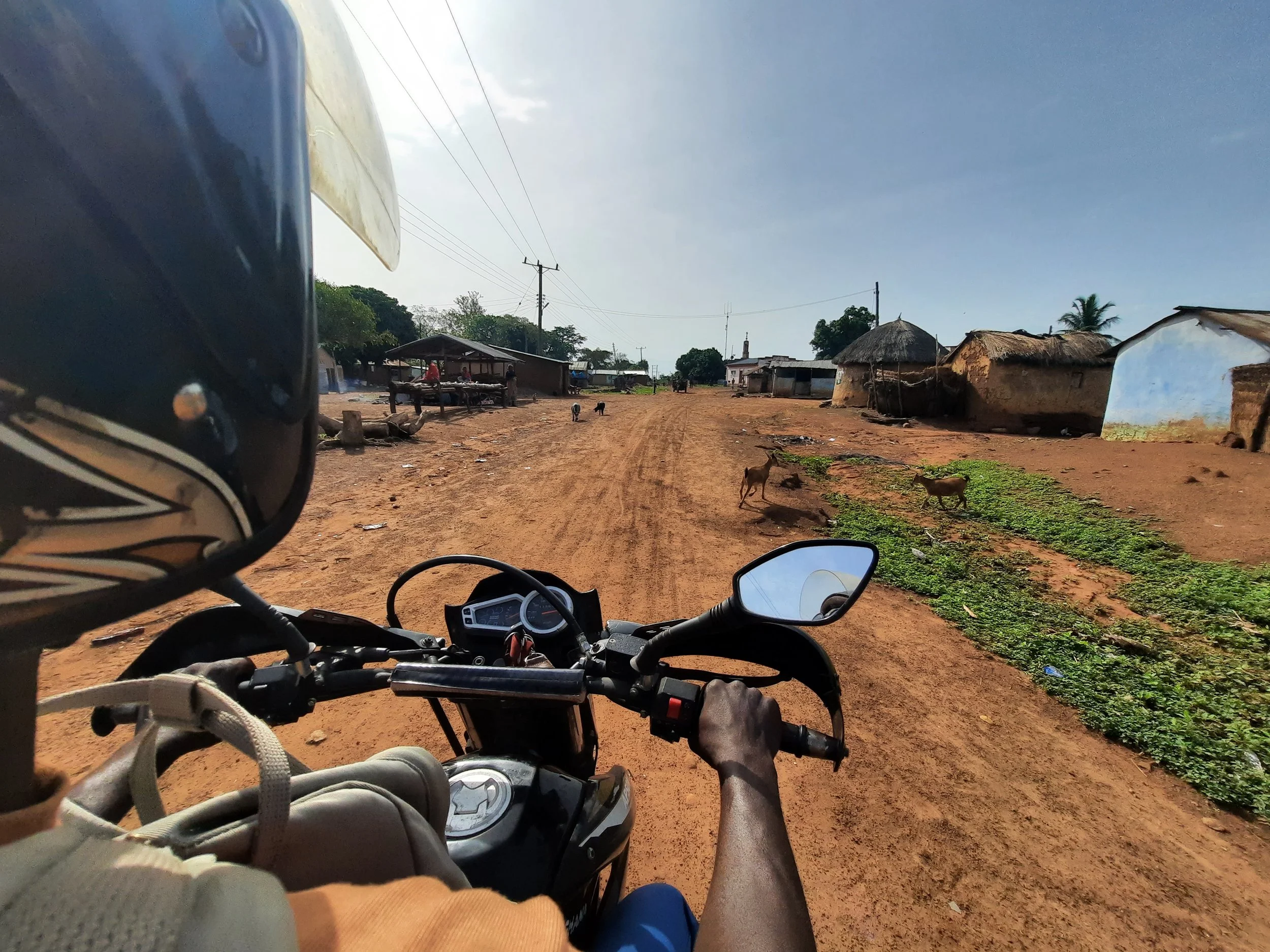
This year Seek Peace evaluated the CHIPS peacebuilding programme in northern Ghana, which works with two ethnic groups who fought a devastating war in the 1990s. For more than a decade the CHIPS Ghana team has worked with both groups. Currently they have more than 100 activity sites and 1,600 registered participants. They run savings groups and a credit union, livelihood projects in crops, animal rearing and beekeeping, community vet and natural medicine training, child nutrition support, and sanitation and hygiene work.
The programme’s theory of change is ambitious, and rightly so. It aims to improve livelihoods and change how people see the other group, building trust and reducing prejudice through years of working alongside one another, running projects that build cooperation. What we found is that this change is happening. But peace is also arriving, more consistently, by another route.
Changing hearts and minds
The heart change the programme hopes for is there in the evidence. Survey respondents wrote that they were “no longer afraid of the other ethnic group”, and that “I don’t think the way I used to think about other tribes.” Participants described a father who once refused medicine given by someone from the other group for his child, and now gives it without hesitation. That is a costly act of trust.
Much of this comes from the slow, patient work of the team itself. They are an ethnically mixed team, and they have carried a consistent message of peace into these communities for more than a decade.
Two routes to peace, in people’s own words
What participants and survey respondents told us about why relations have changed.
- “Because we are meeting, doing things in common, having friendships. So if money is needed, we can support.”
- “I’m no longer afraid of the other ethnic group.”
- “It changed because I don’t think the way I used to think about other tribes.”
- Using savings group money to help each other “makes us to see each other as collaborators and not enemy.”
- “If you have assets, you will not look for trouble.”
- “There’s no winner in the war or in a conflict. So we are all losers. That’s why we now have to respect one another.”
- Two men who each own a block house “will not be thinking to bring any confusion that will lead to their houses being destroyed.”
- “If we fight, the money meant for development will be used for peacekeeping.”
The other route
Alongside this, we heard something else. In focus groups discussing relations between the two groups, the most common reason given for the absence of violent conflict was what people would lose. One participant described two men who each own a block house: “they will not be thinking to bring any confusion that will lead to their houses being destroyed” Another said, “There’s no winner in the war or in a conflict. So we are all losers. That’s why we now have to respect one another.”
We have started calling this a “stake in stability”. People have built something, and conflict would destroy it. This reasoning came up in four of the five focus groups.
Why don’t people fight?
How often each kind of reasoning came up across the five focus groups.
The programme supports this directly through savings groups, new income skills, livestock and sanitation. But the wider region is speeding it up too. Government investment in schools, clinics, boreholes and markets has given households more to protect, and the government is clear about the link: communities told us they had been warned that “if we fight, the money meant for development will be used for peacekeeping.”
Pragmatic peace is still peace
Whatever the motive, daily life has changed. People now stay overnight in each other’s houses, trade on credit across ethnic lines and work each other’s farms. Participants described these things as impossible before. Even during a sharp collapse in crop prices this year, people did not blame their hardship on the other group.
Then and now
Things participants described as impossible before. Tap a card to see what they told us now.
That is a real achievement, and the programme has played its part in it. Much of peacebuilding in practice looks like this. Interests, incentives and things worth protecting often hold the peace while deeper change takes root.
Is that enough? Time will tell
The difficulty is that a peace built on assets is only as secure as those assets. It has not yet been tested by a deeper economic shock, by rising tension between farmers and herders in the region, or by disputes within each group spilling over. And it has not touched the questions of land and traditional authority that sat at the heart of the original conflict. If what holds the peace is what people stand to lose, then losing it could change the calculation.
This is why the heart change matters so much. Trust, friendship and a changed view of the other group do not disappear when crop prices fall. They are what make a peace resilient when the incentives weaken.
What this means for the work
Development will keep doing much of the pragmatic work. Government and other organisations are building roads, schools and markets, and that is good. What they are not doing is the patient work of changing how people see one another. That is what makes a peacebuilding programme distinct, and it is where we would encourage the team to put its weight:
Protect what holds the peace now. Strengthening livelihoods against shocks is peace work too.
Double down on what is unique. The relationships, the messaging, and the trust built by a mixed team over many years are things no one else is offering.
Make contact deliberate. The heart change is strongest where people from both groups work side by side, so more of that should be designed in.